Marriage Story is a beautifully made film directed and written by Noah Baumbach that has already been nominated for a Golden Globe and will likely be nominated for an Oscar, making it Baumbach’s most successful film that he has directed. This movie is a perfect depiction of reality, as a married couple falls out of love and goes through a divorce. The pacing and screenplay of the film make the story feel exceptionally realistic. It is a movie about the pain within all people: what a relationship, in the midst of desolation, will do to protect their own self-interest. Their love is systematically broken down and fractured in the pursuit of personal gain, such a child and property custody.
Charlie (Adam Driver) and Nicole’s (Scarlett Johansson) love is systematically broken down and fractured in pursuit of personal gain, such as child and property custody. The anger and selfishness incrementally increases as the movie progresses. While Charlie and Nicole had agreed not to use divorce lawyers towards the beginning of their split, Nicole is later given a recommendation to use a female lawyer named Nora (Laura Dern), causing Charlie to get one too. Divorce lawyers take the inner anger within each person in the relationship and amplify it, causing Charlie and Nicole to grow farther apart. One of my favorite lines that summarizes this is said by Charlie when the two are fighting. He says “you WERE happy, you just decided you weren’t now”, because Nicole’s lawyer, Nora, definitely caused her to put more anger onto Charlie. In their first meeting, the last thing Nora says to Nicole is “that f**king a**hole”, talking about Charlie. As a divorce lawyer, her method is to manipulate Nicole into seeing all of the worst parts of her marriage and to hate Charlie, even though she WAS happy in their marriage, as the viewer can see in the first scene.
Now it’s time for my thoughts on the ending of this film. During the movie, I thought about what would happen if they read the letters that opened the movie (when Nicole and Charlie talk about why they initially fell in love with one another) to each others’ faces. If this were to happen some later time in the film, it would have provided satisfaction to the average viewer who is rooting for them to fall back in love. However, as I said earlier, this movie excels in mimicking reality so I knew there was no way that there would be that sort of ending. That being said, I absolutely LOVED what they did with the ending when Charlie walks in on their child reading Nicole’s letter about why she fell in love with him, reminding both the viewer and Charlie of how the movie began, at a time when they were a happy, deep in-love, and married couple. As Nicole appears in the doorway in the background behind Charlie, both of them cry to themselves. I love how this displays them reminiscing on a time when they were in love while knowing that they can never get that time back because they are not crying together, they are crying separately.
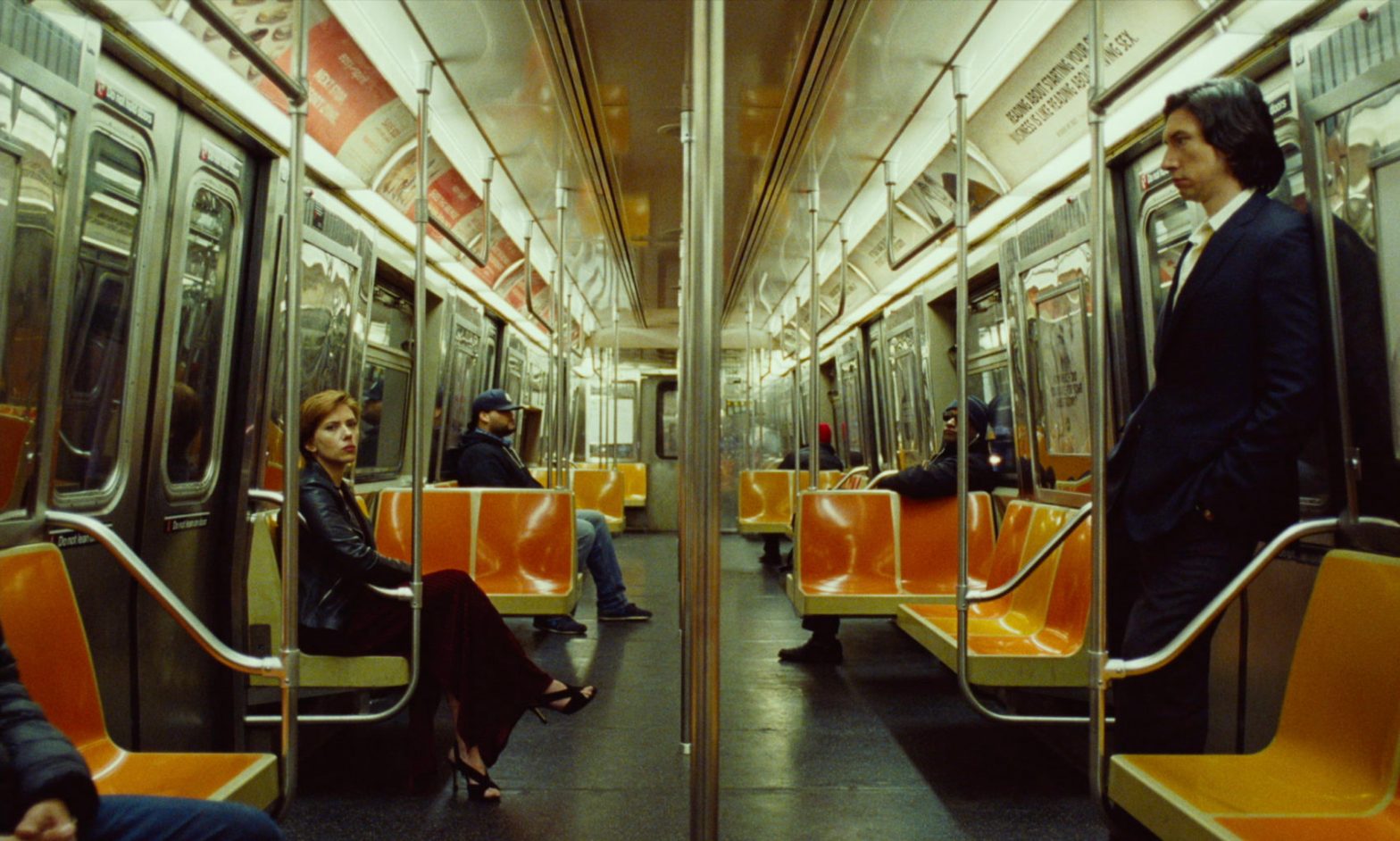
The shots in this film are beautifully filmed and edited together. The editing in particular in intriguing because of the irregular pace of the cuts. In the scenes with the most tension, specifically when Nicole, her sister, and her mom are about to give Charlie the divorce papers and when Charlie and Nicole get into their big fight, there are quick cuts and close-up shots to mimic the stress and claustrophobia of the moment. However, in the scene with Nicole and Charlie talking in Nicole’s house, there is a lack of cuts and wider shots, symbolizing the lack of substance in their relationship. The editing style is also used to show the mood of the character within an individual perspective. When Charlie cuts his finger, the shot is close and quick to show urgency, but after he falls on the floor, it is back to a wider shot to show hopelessness. Another example of this is when there is a wide-angle shot of Nicole and Charlie sitting on opposite sides of a dull room as the two try to talk about their lawyers. As this scene quickly becomes more heated when the two start yelling at each other, there are quick close-up cuts of the two of them going back in forth. In most films, this type of quick-cut editing would not work, but for Marriage Story, it was an extremely effective way to display emotion and allow the viewer to feel for the characters on the scene in a more intimate way.
Now I want to talk about one of my favorite moments of this film that really opened up my perspective. When Nicole is practicing for court questioning with her divorce lawyer, she shares her strengths and weaknesses as a mother. She is asked if she has done drugs in the past or if she drinks regularly, and she admits that she has done cocaine at a party, gets wine by the bottle at restaurants, and has done pot a few times. Her layer, Nora, stops her and tells her that she can’t say this stuff because she obviously won’t get custody that way. I have to admit, I was definitely on Charlie’s side up until this point, and was almost even happy that Nicole was saying this stuff because I knew it would give Charlie custody. However, when Nora stops her, she says this:
We can accept an imperfect dad. Let’s face it: the idea of a good father was only invented like 30 years ago. Before that, fathers were expected to be silent and absent and unreliable and selfish. And we can all agree that we want them to be different, but on some basic level, we accept them. We love them for their falibilitties nut people absolutely do not accept those same qualities in mothers …… You have to be perfect and Charlie can be a f**k up and it doesn’t matter. You will ALWAYS be held to a different and higher standard.
Nora Fanshaw, Marriage Story
That dialogue really opened up my eyes because like I said, up until that point I was definitely on Charlie’s side. However, I completely agreed with what Nora said. Up until that point, I had found Nicole to be unlikable and was rooting against her if anything. But in all truthfulness, she did not do anything majorly wrong. I mean, Charlie literally is revealed in the BEGINNING to have had cheated on Nicole during their relationship, but both of them just sweep it under the rug, and I as the viewer did too. Even though Charlie does try hard to be a good father, the truth is that Nicole has always been more present in their child’s life, but the viewer still wants Charlie to have custody.
This movie is like the part that La La Land skipped over. Allow me to elaborate! La La Land majorly focusses on the process of falling in love. After setting up their dream-like falling in love process, they then show Mia and Sebastian fighting. They end the movie by jumping to several years following their fights and reveal that they have been split up for a number of years and have moved on from any lingering anger of frustration left after their split. The beginning scene in Marriage Story is Charlie and Nicole talking about why they love each other, which is basically a recap of the entirety of La La Land. They skip over the details of their falling in love story, but make it clear that they were once very much in love. It is between the minor fights in La La Land and the ending that Marriage Story takes place. While La La Land shows a fantasy dream of two people falling in love, Marriage Story show a real and raw story of two people falling out of love.
In conclusion, Marriage Story is a truly phenomenal film. I did not get a chance to talk about how absolutely phenomenal the acting was, but both Adam Driver and Scarlett Johansson deserve an Oscar. This was definitely a very vulnerable role to play for both of them, but especially for Adam Driver, for he has not played many characters similar to this one in the past. Noah Baumbach’s screenplay also blows me way. It’s hard to find words that explain how perfectly the script and dialogue examine love, so I highly recommend that you watch this film.
– Evie 🙂
 EVIE ON FILM.